
Division of labor within couples: interrelated effects if gender and disability
How do heterosexual spouses or partners divide work up between them when the man and/or the woman is disabled?

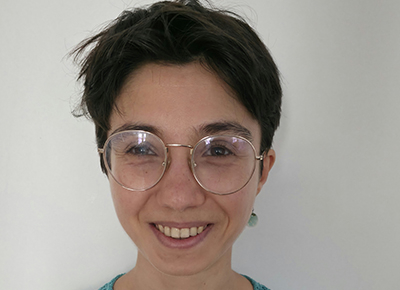
Celia Bouchet is a sociologist and post-doctoral fellow working on the PRESPOL research project [Promoting the economic autonomy of disabled people through employment and social policy] funded by the “Autonomy” PPR [Priority research program] in connection with Science Po’s LIEPP research platform (Laboratory for Interdisciplinary Evaluation of Public Policies) and affiliated with LISE [Interdisciplinary Economic Sociology laboratory] (CNRS/CNAM). Bouchet was awarded the journal Population’s Early-Career Researcher Prize for her article “Gendered work restrictions: disability and the division of labor in France".
What’s the subject of the article for which you won the Early-Career Researcher’s Prize?
In this article was interested in the division of labor within heterosexual couples from the perspective of disability. Sex-related division of labor is an important concept in research on gender inequalities, as it concerns a differentiated, hierarchical division of roles between men and women. One main issue within couples is paid work versus unpaid work such as housework and parenting tasks. In fact, most studies on this issue do not take specific account of disability but focus implicitly on couples made up of non-disabled people. And those studies that do discuss disability focus on the individuals who provide informal assistance to a disabled family member rather than on disabled people themselves who are part of couple.
I discuss how I used a combination of quantitative and qualitative methods; here, analysis of data from INSEE’s ongoing Employment Survey on one hand, life-story interviews with people who grew up with a visual impairment or specific learning disorder on the other. One finding is that when it comes to employment and household tasks, disability-related restrictions can lead couples to adjust traditional intra-couple division-of-labor models to conform better to their situations or needs. For example, disabled men are less likely (than non-disabled men) to be in a dual-career couple or to be the couple’s sole breadwinner, and they may be in charge of some household or parenting work during periods of personal unemployment.
The employment situations of disabled women, meanwhile, have less to do (than for non-disabled women) with whether or not they have children (the parenting specialization associated with women), and in cases where their disability restricts their involvement in domestic or parenting work, some women may get those tasks redistributed within the couple to some degree. However, such adjustments do not call gender norms into question; those norms remain the reference and ideal for disabled people.
What are your current projects?
My PhD thesis, entitled “Disability and social outcomes,” which I defended in 2022, centered around disability-related issues. I now want to broaden my approach to take in different types of disparities by focusing on social groups and detailing my study of the experiences, representations, and practices of people coping with such disadvantages. In this connection I recently co-edited a translated collection of fundamental feminist studies on disability, in conjunction with a group of academics and a feminist organization around disability.
I’m also working on the role of mixed methods in producing knowledge on inequalities and disparities and minoritized people’s experience of them.
What does Population’s Early-Career Researcher Prize mean to you?
I’m very touched to have received this award—personally, to begin with. My article on the interrelations between gender and disability, the intertwining of the two, was really important to me. I spent a great deal of time on it and rewrote it several times, at the supportive urging of my colleagues, before actually submitting it to the journal.
From a wider perspective, I’m intensely aware of what this prize represents in the way of recognition for what are sometimes underestimated research subjects and methods. Namely, the award shows that disability is being taken into account not only in specialized journals but in the social sciences generally. That I should win it suggests to me that demography is opening up to qualitative or mixed approaches—a great satisfaction to me.
Reference:
Célia Bouchet, Gendered work restrictions: disability and the division of labor in France, Population, n° 2/2025