
What lies behind the last two centuries’ gains in life expectancy?
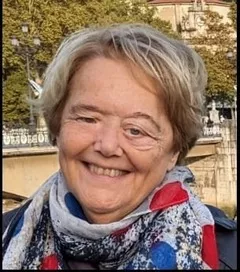
France Meslé, INED senior researcher emeritus, studies mortality with particular emphasis on causes of death. Her work focuses on mortality at very old ages and longevity. France Meslé is the 2025 recipient of the IUSSP (International Union for the Scientific Study of Population) Laureate Award honoring exceptional achievements and contributions to the population field.

What are the aims of health and mortality research?
Mortality is a fundamental component of population dynamics. Measuring it and determining how it is has evolved is crucial to understanding demographic developments and trends. Mortality is also a key indicator of a given population’s state of health. In countries with complete, reliable vital events registers, tracking progress (or regression) in life expectancy is the simplest way of assessing the health of that population and the different groups it comprises. Study of causes of death is used to determine and specify the wellsprings or mechanisms driving those changes and developments. However, mortality data of this kind must be supplemented by surveys that better apprehend disease and disability frequency.
What has been the focus of your research in recent years?
I’ve long been interested in how causes of death evolve in France and other European countries. It isn’t easy to track those developments over a long period of time. To measure causes of death accurately you have to determine the International Classification of Diseases (ICD) category that the cause-of-death reported by health officials fits into. The ICD is regularly revised to account for progress in medical knowledge, which is important, but those revisions cause breaks in series that complicate analysis of change. At INED we’ve developed a method of reconstructing coherent time series by cause-of-death and applied it to a range of European countries, the US, and Japan. Series are accessible online.
I also participate in an international research group that studies multiple causes of death, where all information on the given death certificate is taken into account to better understand the complexity of the processes leading to death. And I’m particularly interested in mortality at extremely advanced ages. I co-manage the IDL database (International Database on Longevity) which publishes information on people who lived to be 105 or over.
In addition to the relatively trivial matter of record longevity, collecting validated data around people who died at extremely old ages will ultimately lead to better knowledge of mortality risks at such ages. Estimates for this group are not yet fully certain or reliable.
Has cause-of-death analysis shed light on the mechanisms that drive improvement in life expectancy and the fact that progress in it has now slowed in some parts of the world?
Cause-of-death analysis played an essential role in formulating the health transition theory. In the first stage, which Abdel Omran defined as the epidemiological transition, life expectancy rose thanks to spectacular reductions in infectious diseases that in turn lowered mortality at all ages but especially among children. The epidemiological transition, which began in the late 18th century in some European countries, gradually diffused through the world in the 19th and 20th centuries. However, in the 1950s and 1960s, life expectancy progress began to slow in highly developed countries. Chronic diseases, and first among them cardio-vascular diseases and those related to social activities and trends—alcoholism, smoking, road accidents—became the main causes of death at that time and slowed the continuing advance in life expectancy. In the last quarter of the 20th century, thanks to a considerable series of interventions ranging from campaigns to raise awareness of the dangers of smoking and change tobacco use behaviors to new treatments and therapeutic techniques and the development of state-of-the-art surgery techniques and technology, it became possible to achieve considerable reductions in the mortality caused by circulatory system diseases, and to do so for people of ever-older ages—a development referred to as the Cardio-vascular Revolution.
However, in the last 15 years or so, a new slowdown in progress has been observed, suggesting that we may be entering a new stage in the health transition. The rise in neuro-degenerative diseases and resurgence of infectious ones (flu and of course COVID) are slowing the decrease in mortality. Only by studying causes of death will we be able to find explanations for this recent phenomenon.