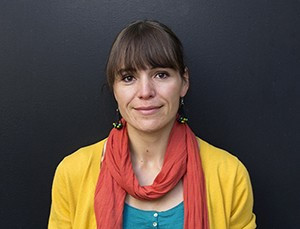

Emilie Counil

How are social inequalities in health constructed over people’s occupational careers? INED researcher Emilie Counil answered our questions on developments in research on health at work.
This October 24, 2025, INED celebrates its 80th anniversary. Since its founding, the Institute has been at work analyzing population dynamics in France and the world to better understand future demographic and social trends and developments.
(Interview conducted in April 2025)
How has health, particularly work health, been discussed and studied in demography and population sciences over past decades?
Study of how health and work are connected focused on different aspects of the question depending on the scientific discipline of the researchers. Epidemiology focused on exposure to occupational health risks; economics, on employment and working conditions; sociology, on labor market stratification and the social distribution of risk; and demography on inequalities in life expectancy and healthy life expectancy, generally through comparison of managers and manual workers. In all those cases, research made use of theoretical models with positions on the importance of working life in explaining health inequalities among adults. In public health research the framework applied was the World Health Organization’s social determinants of health, from the late 2000s.
To understand the dynamic construction of these disparities, the social sciences gradually isolated two mechanisms: work as a cause of disorders and disability, which amounts to thinking of inequalities in terms of social causality; and, conversely, disorders and disability as having an effect on people’s occupational trajectories and social positions, with the idea that a mechanism of selection through health is operative whose effect depends on the social protection system involved.
What issues have come to the fore in recent years?
An increasing number of empirical studies show that social disparities in early mortality and healthy life expectancy persist. They also point up the fact that employment and working conditions are implicated in the construction of those inequalities, including beyond retirement age. Today we observe a resurgence of these questions in connection with gender and race relations given the sharp social divisions related to employment and occupational risk.
For example, racialized persons are more affected than other groups by the rise of new types of employment situated beyond the margin of stable steady jobs, as they often have low skilled jobs of the sort generated by economic “platformization.” The destabilization of employment and working conditions, and the fact that people now move back and forth between periods of employment and unemployment in their work careers, are also attracting increasing research attention, especially in a context where legal retirement ages are raised repeatedly and unemployment insurance policies regularly revised.
Health disparities between men and women are also being studied, particularly in connection with healthy aging; here researchers are particularly attentive to connections between paid and domestic work and occupational and family trajectories.
The discipline of demography is in a good position to measure health and mortality disparities by different life history components, also to deepen our interpretation of the inequalities cited by way of other population sciences and from an intersectional perspective.
What are some research studies currently being done on these issues?
We are particularly attentive what may interfere in knowledge production in these areas, and the blind spots involved. To overcome those obstacles we develop complementary research strategies ranging from the use of extensive medical-administrative databases for the entire resident population of France to participatory surveys that enable researchers to reach specific population groups that would otherwise remain invisible.
Our team, working in the framework of the WORTH-IT project (WORk, healTH, inequalITies) makes on EDP-Santé, a database that pairs sociodemographic data from France’s Permanent Demographic Survey with health care that has been reimbursed by the country’s universal health insurance system. This vast information source provides data on over 3 million respondents for over 10 years. This database enables us to study the dynamic mechanisms of inequality construction (causality and selection) in a unified frame, as we can see these processes as part of people’s life trajectories. Our first pilot studies are currently on work accidents and psychological disorders. We should soon be able to undertake comparative studies of France, Finland, Sweden, and Italy.
In the TRAVAIL-POP project, several members of our research unit have teamed up with an advocacy group called VoisinMalin (Smart neighbor) to co-develop a program of door-to-door guidance in three priority urban districts, the aim being to protect inhabitants of working-class neighborhoods from work-related health risks. And the SANTÉ-COURSE project is the first quantitative survey on the health of digital platform food delivery couriers in France.