
Division of labor within couples: interrelated effects if gender and disability
How do heterosexual spouses or partners divide work up between them when the man and/or the woman is disabled?
INED research encompasses an extremely wide range of studies related to the family, whether of fertility trends, male-female inequalities when it comes to finding a balance between personal life and work life, or living standards in lone-parent families.
Isabelle Konuma, senior professor of Japanese studies at INALCO, recently published Eugénisme au Japon—Politiques et droit de 1868 à 1996 [Eugenics in Japan: Policies and law, 1868-1996] with INED Publications. She answered our questions about the premises of eugenics in Japan and the impact of the practice on the country’s demographics at the present time.
Fertility has been falling in France for ten years now, and demographers have been investigating the reasons. It would seem that people’s desire to have children is itself affected as they confront contexts and constraints that may discourage them from becoming parents or growing their family.
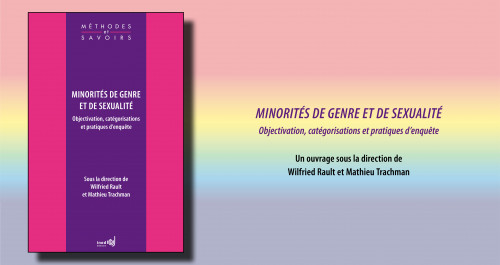
Editors of "Minorités de genre et de sexualité", a recent INED Publications release, answered our questions.
answered our questions on the impact of childcare on children’s development.
Jenny Garcia and Gaëlle Meslay, winners of a Marie Skłodowska-Curie post-doctoral fellowship, answered our questions.
Post-doctoral student at INED, studies ties between imprisoned fathers and their children in France and has answered some questions on her research.
INED has signed a partnership with Duke Global Health Institute. In the wake of this development, we interviewed Anika Schenck-Fontaine, a PhD student from Duke who was hosted at INED from October 2016 to March 2017.
tells to us about the book “L’aide à la procréation, dans les pays du Nord et du Sud” which she co-edited with Sayeed Unisa
tells us about assistance for forced marriage victims
tell us about men’s and women’s participation in household and parenting tasks
answers our questions on the British Millennium Cohort
answers our questions about the organization and results of the Elfe study
Medically assisted human reproduction accounts for nearly 4% of births in France. Despite a 2021 bill making these procedures accessible to a greater number, inequalities persist for single women and lesbian couples.
What is the schooling situation of senior high school students in French Polynesia? Why do a third of high school students there no long live with their parents? What kinds of plans for their working lives do seniors in Polynesia have?
INED has been conducting surveys since its founding. Albane Gourdol, head of the Surveys support service, reiterates the importance of INED’s major surveys and the issues involved in recent technological and methodological developments.
INED senior researcher Alain Blum, a specialist of the demography of Russia, tells us about his latest book, Déportés pour l’éternité. Survivre à l’exil stalinien, 1939-1991 [Deportees for eternity: Surviving exile under Stalin, 1939-1991], written together with Emilia Koustova.
Peter Brandon, a sociology professor from The University at Albany, New York, and winner of a Tocqueville-Fulbright Distinguished Chair Award, whom INED is hosting until the end of February 2024, has answered our questions.
This study analyzed sexual health-related content in 65 episodes of 6 recent (2015-2020) Netflix series popular with young people.
introduce us to INED’s Datalab.
associated researchers at INED, tell us about the findings of a study on parental care of infant children.
Interview with INED researcher Wilfried Rault on a study of gay and lesbian social and geographic mobility
Emanuela Struffolino tells us about the role of employment and education on the perceived health of single mothers in Switzerland.
discusses the new French policy to modulate family benefits on the basis of income
the legalization of same-sex marriage in France ten years on
explains what is at issue in the ELFE study (Etude Longitudinale Française depuis l’Enfance)
Noëline Vivet, a PhD student at INED, is writing her thesis on promoting sexual and reproductive health among young disabled people. After completing a review of the literature, Noëline is now working in the field.
How does parents’ income impact the incomes of their adult children? While there is an intergenerational correlation, other factors, such as geographic mobility, need to be accounted for. Louis Sirugue, a doctoral student at INED, answered our questions.
Enfance et famille au Mali [Childhood and family in Mali], recently published by INED Editions, is about the Bwa people, a population living in a primarily rural zone in Mali on the border with Burkina Faso.
An interview with CNRS historian and demographer Sandra Brée, INED research fellow Marie Bergström, and sociologist researcher Christophe Giraud on the notion of the couple in society and the phenomenon of "living apart together".

Claire-Lise Gaillard, a post-doctoral fellow working at INED, is studying 4 sets of personal advertisements published during key moments last century: the interwar period, when the idea of sexual entente in marriage was enshrined; and the 1970s, marked by politicization of intimate relations and by falling marriage rates.
To mark the International Day of Bisexual Visibility on September 23, sociologist Mathieu Trachman looks back at the research carried out on bisexuality at INED and the specific characteristics of this population.
research directors at INED answer our questions on the distribution of domestic tasks during periods of confinement.
manage the LawsAndFamilies database at INED and answered our questions about it.
INED’s researcher tells us about the book "A dictionary of conventions"
speaks about the research project on the orphans in France
tells us about recent changes about parental leave in France
tell us about the Generations and Gender Programme (GGP)
helps us to understand the phenomenon of transnational families
Medically assisted human reproduction accounts for nearly 4% of births in France. Despite a 2021 bill making these procedures accessible to a greater number, inequalities persist for single women and lesbian couples.
Fertility has been falling in France for ten years now, and demographers have been investigating the reasons. It would seem that people’s desire to have children is itself affected as they confront contexts and constraints that may discourage them from becoming parents or growing their family.
The Human Multiple Births Database or HMBD, a project funded by France’s Agence Nationale de la Recherche, was awarded the 2023 Open Science Research Data prize for the category “Creating the conditions for data reuse.” We interviewed the INED team working on HMBD.

To what collective imaginations does the title of this book refer? What representations of artificial reproduction do literature, cinema and television fiction convey? What place do these collective imaginations occupy in contemporary society? The editors of the book answered our questions.
INED senior researcher France Guérin-Pace tells us about the survey on changes in Tunisian society that she has been coordinating since 2011.
Paul-André Rosental talks about “Destins de l’eugénisme”, published in 2016
present the Health segment of the ELFE cohort study (Etude Longitudinale Française depuis l’Enfance)
answers our questions on the British Millennium Cohort
Demography is the only social science to apply a long-term approach to the future. INED researcher Michel Guillot reviews the basic principles of population projecting, how methods have evolved, and uncertainties about results.
INED research fellow Andrea Verhulst studies mortality among children under 5 across the world and excess perinatal mortality (deaths near the time of delivery or soon after) in Southern Asia and Western Africa.
Laurent Toulemon, Director of Research at INED, talks about recent fertility trends in France, comparing them with other OECD countries.
INED research director tells us about the seasonality of births.
associated researchers at INED, tell us about the findings of a study on parental care of infant children.
Emanuela Struffolino tells us about the role of employment and education on the perceived health of single mothers in Switzerland.
tell us about the Generations and Gender Programme (GGP)
explains what is at issue in the ELFE study (Etude Longitudinale Française depuis l’Enfance)
Isabelle Konuma, senior professor of Japanese studies at INALCO, recently published Eugénisme au Japon—Politiques et droit de 1868 à 1996 [Eugenics in Japan: Policies and law, 1868-1996] with INED Publications. She answered our questions about the premises of eugenics in Japan and the impact of the practice on the country’s demographics at the present time.
Peter Brandon, a sociology professor from The University at Albany, New York, and winner of a Tocqueville-Fulbright Distinguished Chair Award, whom INED is hosting until the end of February 2024, has answered our questions.
INED researcher Heini Väisänen has just been awarded a European Research Council grant, one of the European Union’s most selective and prestigious sources of research funding, for her project "Social Inequalities in the Risk and Aftermath of Miscarriage" (SOC-MISC). She has answered our questions.
Kim Xu has been awarded the 2019 Young Author Prize of the journal Population for her article « Changing Patterns and Determinants of First Marriage over the History of the People’s Republic of China ».
tells to us about the book “L’aide à la procréation, dans les pays du Nord et du Sud” which she co-edited with Sayeed Unisa
Isabelle Attané comments on China’s move to end its one-child policy
tells us about the question of infertility in demographic history
answers our questions about the organization and results of the Elfe study
How do heterosexual spouses or partners divide work up between them when the man and/or the woman is disabled?
Noëline Vivet, a PhD student at INED, is writing her thesis on promoting sexual and reproductive health among young disabled people. After completing a review of the literature, Noëline is now working in the field.
Demography is the only social science to apply a long-term approach to the future. INED researcher Michel Guillot reviews the basic principles of population projecting, how methods have evolved, and uncertainties about results.
After one year of conflict, life expectancy in the Gaza Strip has been cut almost in half. INED senior researcher Michel Guillot explains the methodology used to arrive at this conclusion.
Cystic fibrosis is what’s called a rare disease and so, for a long time little was known about them, making it difficult to diagnose.
have invited Généanet to participate in a collaborative project to better understand the French population between the 16th and 18th centuries.
answered our questions about the development of a new mortality projection model.
tell us about INED studies of the prison inmate population in France.
answer our questions on the covid 19 crisis
tells us about intergenerational family co-residency
speaks about the research project on the orphans in France
explains what is at issue in the ELFE study (Etude Longitudinale Française depuis l’Enfance)
answers our questions about the organization and results of the Elfe study
France Meslé, INED senior researcher emeritus, studies mortality with particular emphasis on causes of death. Her work focuses among other things on mortality at very old ages and longevity.
Jenny Garcia obtained a two-year post-doctoral grant (ANR ACCESS ERC and has been using it since 2024 to work in INED’s “Mortality, Health and Epidemiology” research team.
How are social inequalities in health constructed over people’s occupational careers? INED researcher Emilie Counil answered our questions on developments in research on health at work.
INED research fellow Andrea Verhulst studies mortality among children under 5 across the world and excess perinatal mortality (deaths near the time of delivery or soon after) in Southern Asia and Western Africa.
Peter Brandon, a sociology professor from The University at Albany, New York, and winner of a Tocqueville-Fulbright Distinguished Chair Award, whom INED is hosting until the end of February 2024, has answered our questions.
Jenny Garcia and Gaëlle Meslay, winners of a Marie Skłodowska-Curie post-doctoral fellowship, answered our questions.
tell us about the article "Differences in COVID-19 Mortality: Implications of Imperfect and Diverse Data Collection Systems".
INED senior researcher Valérie Golaz tells us about the COVID-19 indicators used in France
conducts research into social inequalities in health.
talks about the working conditions of airline flight crews.
present the Health segment of the ELFE cohort study (Etude Longitudinale Française depuis l’Enfance)
Questions on World AIDS Day
Les causes de décès en France sont indiquées sur le certificat médical de décès. C'est à partir de ce document que l'Inserm établit une base de données utilisée par les chercheurs. Pourtant, les causes de décès ne sont pas toujours connues.
“Period poverty” (précarité menstruelle), though still not taken into account very often, raises many issues and impacts both individuals and society, collective life. INED researcher Valentine Becquet explains why it is so important to talk about menstrual health.
INED researcher Marwân-al-Qays Bousmah is investigating the health of food delivery couriers in France working off of digital platforms. He answered our questions.
INED researcher Anne Gosselin tells us about the research project she’s conducting on workplace health issues with a community association called VoisinMalin [Wise neighbor].
Yuxi Wang, winner of a Marie Skłodowska-Curie post-doctoral fellowship (Horizon Europe), arrived early September 2023 for a two-year stay at INED’s Mortality, Health and Epidemiology research unit, where she’s working under the supervision of INED senior researcher Carlo-Giovanni Camarda.
answer questions on the International Database on Longevity or IDL.
The first lockdown in France put people’s housing, employment, and income conditions as well as their family relations and their methods of balancing family and work life to the test. In Spring 2020 INED took part in the following three internet surveys using representative samples of the French population.
Post-doctoral fellow at the Centre Alexandre-Koyré, DIM ONE HEALTH, and author of an article on the Russian flu pandemic of 1889-1890, answered our questions.

Historian and INED researcher Fabrice Cahen presents the “traveling seminar” INED has set up with the Lycée (high school) Henri Wallon in Aubervilliers, just north of Paris.
present the Longévité et Vieillissements [Longevity and ageing] research cluster
answers our questions on the British Millennium Cohort
tells us about the Fin de Vie en France [End-of-life in France] surveys
La démographie inspire les auteurs de fiction qui imaginent un futur dystopique. L’ouvrage « La démographie de l’extrême : quand la fiction anticipe l’avenir de la société » revient sur les œuvres littéraires ayant abordé très tôt les problématiques actuelles.
INED researcher Marwân-al-Qays Bousmah is investigating the health of food delivery couriers in France working off of digital platforms. He answered our questions.
INED researcher Isabelle Séguy studies sociodemographic behaviors from a historical perspective using archeological data.
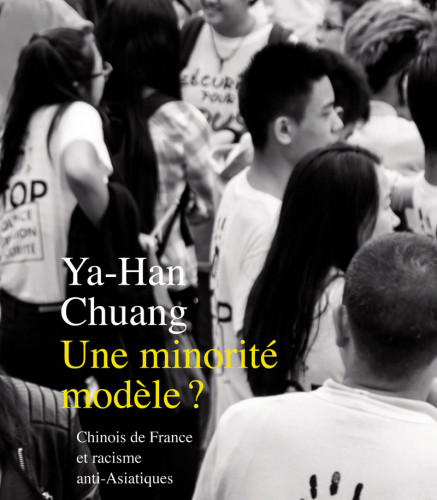
Interview with Ya-Han Chuang, a post-doctoral fellow at INED and author of Une minorité modèle ? Chinois de France et racism anti-Asiatiques.
INED researchers, answer our questions on the book “Au-delà de la crise des migrants : décentrer le regard” (Beyond the migrant crisis: decentering the gaze), which they co-edited.
helps us to understand the phenomenon of transnational families
The phenomenon of substandard or inadequate housing encompasses a range of different situations. What obstacles do people who are excluded from adequate housing have to face, and what is their daily life like?
INED has been conducting surveys since its founding. Albane Gourdol, head of the Surveys support service, reiterates the importance of INED’s major surveys and the issues involved in recent technological and methodological developments.
INED senior researcher Valérie Golaz studies interactions between population and environment from a spatiotemporal and demographic perspective.
Post-doc Audrey Lenoël tells us about the TEMPER project (Temporary versus Permanent Migration)
Cris Beauchemin, Christelle Hamel and Patrick Simon answer our questions on the occasion of the release of the book “Trajectoires et origines” published by Éditions de l’Ined.
Demography is the only social science to apply a long-term approach to the future. INED researcher Michel Guillot reviews the basic principles of population projecting, how methods have evolved, and uncertainties about results.
INED senior researcher Alain Blum, a specialist of the demography of Russia, tells us about his latest book, Déportés pour l’éternité. Survivre à l’exil stalinien, 1939-1991 [Deportees for eternity: Surviving exile under Stalin, 1939-1991], written together with Emilia Koustova.
Senior researcher Patrick Simon tells us about religious diversity in France, including intergenerational transmission of religion and religious practices by inhabitants’ origins.
INED researcher tells us about her study of homeless immigrants and descendants of immigrants in France.
tells us about the question of discrimination
La démographie inspire les auteurs de fiction qui imaginent un futur dystopique. L’ouvrage « La démographie de l’extrême : quand la fiction anticipe l’avenir de la société » revient sur les œuvres littéraires ayant abordé très tôt les problématiques actuelles.
Comment les images satellites enrichissent les données démographiques habituelles ? Ces images renseignent sur l’agriculture, l’urbanisation, le climat, la pollution…et peuvent même dans remplacer un recensement.
INED researcher Marwân-al-Qays Bousmah is investigating the health of food delivery couriers in France working off of digital platforms. He answered our questions.
INED has been conducting surveys since its founding. Albane Gourdol, head of the Surveys support service, reiterates the importance of INED’s major surveys and the issues involved in recent technological and methodological developments.
INED senior researcher Valérie Golaz studies interactions between population and environment from a spatiotemporal and demographic perspective.
INED researcher tells us about the situation of students of working-class background in France after they move out of the family home.
tell us about INED studies of the prison inmate population in France.
INED researcher tells us about her study of homeless immigrants and descendants of immigrants in France.
tells us about intergenerational family co-residency
tells us about the Collège International des Sciences du Territoire (CIST) or International College of Territorial Sciences
The phenomenon of substandard or inadequate housing encompasses a range of different situations. What obstacles do people who are excluded from adequate housing have to face, and what is their daily life like?
What is the schooling situation of senior high school students in French Polynesia? Why do a third of high school students there no long live with their parents? What kinds of plans for their working lives do seniors in Polynesia have?
Avant 1850, les Parisiens s'approvisionnaient principalement avec l’eau de la Seine, puis via le Canal de l’Ourcq. Comment la distribution de l’eau a évolué face à la croissance démographique de la ville ? Lionel Kesztenbaum, directeur de recherche à l’Ined, nous raconte un siècle de transformations de l’accès à l’eau dans la capitale.
Ankat Sikarwar, a postdoctoral research fellow at INED, has been awarded the prize for the best poster presented at the European Population Conference.
INED researcher Anne Gosselin tells us about the research project she’s conducting on workplace health issues with a community association called VoisinMalin [Wise neighbor].
Senior researcher emeritus at INED, answers questions about his book Faut-il avoir peur de la population mondiale? [Is there reason to fear the world’s population?].
Post-doctoral fellow at the Centre Alexandre-Koyré, DIM ONE HEALTH, and author of an article on the Russian flu pandemic of 1889-1890, answered our questions.
Interview with INED researcher Wilfried Rault on a study of gay and lesbian social and geographic mobility
talks about the working conditions of airline flight crews.
Qui sont les inspecteurs et inspectrices de l’environnement ? Quelles sont leurs missions ? Hugo Wajnsztok, post-doctorant à l’Ined, enquête sur leur métier à l’Office français de la biodiversité et sur la façon dont leurs pratiques influencent, parfois, les inégalités environnementales.
How does parents’ income impact the incomes of their adult children? While there is an intergenerational correlation, other factors, such as geographic mobility, need to be accounted for. Louis Sirugue, a doctoral student at INED, answered our questions.
After one year of conflict, life expectancy in the Gaza Strip has been cut almost in half. INED senior researcher Michel Guillot explains the methodology used to arrive at this conclusion.
INED researcher Isabelle Séguy studies sociodemographic behaviors from a historical perspective using archeological data.
An interview with CNRS historian and demographer Sandra Brée, INED research fellow Marie Bergström, and sociologist researcher Christophe Giraud on the notion of the couple in society and the phenomenon of "living apart together".
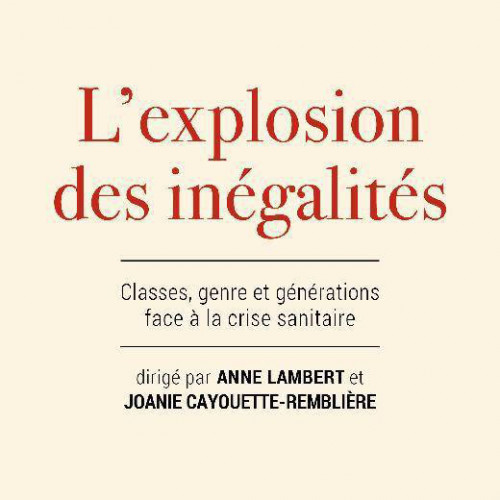
tell us about the new book they edited, L’explosion des inégalités. Classes, genre et générations face à la crise sanitaire [A spectacular rise in inequalities: class, gender, and generations up against the [COVID] public health crisis].
INED researcher Joanie Cayouette-Remblière tells us about the Mon quartier, mes voisins [My neighborhood, my neighbors] survey conducted from March to July 2018 in the Paris and Lyon regions.
INED researcher Léonard Moulin tells us about his doctoral thesis on the effects on higher education students of introducing tuition fees. His work has received several awards, including the 2017 Prix Eicher this January.
tells us about demographic trends in EU Outermost Regions and their effects
How do heterosexual spouses or partners divide work up between them when the man and/or the woman is disabled?
“Period poverty” (précarité menstruelle), though still not taken into account very often, raises many issues and impacts both individuals and society, collective life. INED researcher Valentine Becquet explains why it is so important to talk about menstrual health.
Dahye Kim studies social policies in Asia in the context of changing demographics, specifically, population ageing. Ms. Kim has been awarded the journal Population’s Early-Career Researcher Prize for 2024 for an article entitled, “An equal right to inherit? Inheritance rights and gendered intergenerational transfers in South Korea, 1971–2010.”
Editors of "Minorités de genre et de sexualité", a recent INED Publications release, answered our questions.
tell us about the new book they edited, L’explosion des inégalités. Classes, genre et générations face à la crise sanitaire [A spectacular rise in inequalities: class, gender, and generations up against the [COVID] public health crisis].
post-doc at INED, studies the trajectories of transsexual men and women in France.
manage the LawsAndFamilies database at INED and answered our questions about it.
tells us about intergenerational family co-residency
Isabelle Attané comments on China’s move to end its one-child policy
tells us about assistance for forced marriage victims
tell us about the Generations and Gender Programme (GGP)
While women’s initial education attainment now stands above men’s, they continue to be underrepresented in the sciences and in selective programs. These disparities appear early and are due to women’s academic and occupational orientation choices and anticipation of their future family lives.
For INED researchers Marie Bergström and Mathieu Trachman, gender studies are not limited to analysis of differences between men and women. The point is rather to analyze relations between the two sexes as social relations.
We interviewed Léa Cimelli, an economist, and post-doctoral fellow at INED since November 2023, who studies gender-specific economic effects of union dissolution after the age of 50, notably in France.
To mark the International Day of Bisexual Visibility on September 23, sociologist Mathieu Trachman looks back at the research carried out on bisexuality at INED and the specific characteristics of this population.
tell us about INED studies of the prison inmate population in France.
Following the 2015 VIRAGE survey in metropolitan France, INED conducted another VIRAGE survey in France’s overseas territories in 2018. Why was this decided? How was this survey conducted?
Interview with INED researcher Wilfried Rault on a study of gay and lesbian social and geographic mobility

talks about the working conditions of airline flight crews.
presents her mission as INED’s gender equality supervisor
tell us about men’s and women’s participation in household and parenting tasks
Medically assisted human reproduction accounts for nearly 4% of births in France. Despite a 2021 bill making these procedures accessible to a greater number, inequalities persist for single women and lesbian couples.
Few studies have been done on wealth inequalities between men and women, despite the fact that they are implicated in and impact individuals’ conjugal (couple) and occupational trajectories.
An interview with CNRS historian and demographer Sandra Brée, INED research fellow Marie Bergström, and sociologist researcher Christophe Giraud on the notion of the couple in society and the phenomenon of "living apart together".

explains how the retirement decisions of men and women covered by the French national contributive pension system differ.
research directors at INED answer our questions on the distribution of domestic tasks during periods of confinement.
associated researchers at INED, tell us about the findings of a study on parental care of infant children.
INED’s researcher tells us about the book "A dictionary of conventions"
Christelle Hamel and Mathieu Trachman tell us about the INED study of LGBT ways of life, health and situations of insecurity
tell us about INED’s “ Demography, Gender and Societies” research team
explains why it is important to analyse gender representations in school textbooks
La démographie inspire les auteurs de fiction qui imaginent un futur dystopique. L’ouvrage « La démographie de l’extrême : quand la fiction anticipe l’avenir de la société » revient sur les œuvres littéraires ayant abordé très tôt les problématiques actuelles.
have invited Généanet to participate in a collaborative project to better understand the French population between the 16th and 18th centuries.
Delegation researcher, talks to us about selectivity between masters programs in the Paris region.
tells us about intergenerational family co-residency
present the Longévité et Vieillissements [Longevity and ageing] research cluster
explains what is at issue in the ELFE study (Etude Longitudinale Française depuis l’Enfance)
France Meslé, INED senior researcher emeritus, studies mortality with particular emphasis on causes of death. Her work focuses among other things on mortality at very old ages and longevity.
explains how the retirement decisions of men and women covered by the French national contributive pension system differ.
INED’s researcher tells us about the book "A dictionary of conventions"
present an unprecedented survey on the learning of kindergarten children, implemented by the Elfe Unit in spring 2016 in nearly 9,000 schools
present the Health segment of the ELFE cohort study (Etude Longitudinale Française depuis l’Enfance)
tells us about the Fin de Vie en France [End-of-life in France] surveys
answered our questions on the impact of childcare on children’s development.
The first lockdown in France put people’s housing, employment, and income conditions as well as their family relations and their methods of balancing family and work life to the test. In Spring 2020 INED took part in the following three internet surveys using representative samples of the French population.
INED researcher Léonard Moulin tells us about his doctoral thesis on the effects on higher education students of introducing tuition fees. His work has received several awards, including the 2017 Prix Eicher this January.
Isabelle Attané comments on China’s move to end its one-child policy
tells us about demographic trends in EU Outermost Regions and their effects
answers our questions about the organization and results of the Elfe study
“Period poverty” (précarité menstruelle), though still not taken into account very often, raises many issues and impacts both individuals and society, collective life. INED researcher Valentine Becquet explains why it is so important to talk about menstrual health.
Enfance et famille au Mali [Childhood and family in Mali], recently published by INED Editions, is about the Bwa people, a population living in a primarily rural zone in Mali on the border with Burkina Faso.
INED research fellow Andrea Verhulst studies mortality among children under 5 across the world and excess perinatal mortality (deaths near the time of delivery or soon after) in Southern Asia and Western Africa.
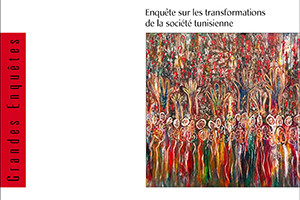
answers our questions on the sociological survey conducted throughout Tunisia, the results of which are now being published in a book in the Ined’s Grandes enquêtes collection.
Senior researcher emeritus at INED, answers questions about his book Faut-il avoir peur de la population mondiale? [Is there reason to fear the world’s population?].
The editor-in-chief of “Population and Societies” talks about INED’s monthly magazine.
tells to us about the book “L’aide à la procréation, dans les pays du Nord et du Sud” which she co-edited with Sayeed Unisa
tells us about the upcoming World Population Day and the Millennium Development Goals
answer our questions about the Dictionnaire de la Démographie
helps us to understand the phenomenon of transnational families
Isabelle Konuma, senior professor of Japanese studies at INALCO, recently published Eugénisme au Japon—Politiques et droit de 1868 à 1996 [Eugenics in Japan: Policies and law, 1868-1996] with INED Publications. She answered our questions about the premises of eugenics in Japan and the impact of the practice on the country’s demographics at the present time.
INED senior researcher Alain Blum, a specialist of the demography of Russia, tells us about his latest book, Déportés pour l’éternité. Survivre à l’exil stalinien, 1939-1991 [Deportees for eternity: Surviving exile under Stalin, 1939-1991], written together with Emilia Koustova.
INED researcher Isabelle Séguy studies sociodemographic behaviors from a historical perspective using archeological data.
INED researchers Géraldine Duthé and Valérie Golaz explain how the world’s population is distributed, what demographic growth is expected in the coming decades, and present some longer-term demographic projections.
tell us about the article "Differences in COVID-19 Mortality: Implications of Imperfect and Diverse Data Collection Systems".
We interviewed Reiko Hayashi, Director of the Department of International Research and Cooperation at the National Institute of Population and Social Security Research (IPSS), about the institute’s partnership with INED.
tells us about DEMOSUD-Demography of the populations of the South, an Ined Research Unit whose mission is to develop exchanges and carry projects on the demographic dynamics of the populations of the South, their springs and their stakes.
tells us about demographic trends in EU Outermost Regions and their effects
tells us about the International Union for the Scientific Study of Population (IUSSP)
After one year of conflict, life expectancy in the Gaza Strip has been cut almost in half. INED senior researcher Michel Guillot explains the methodology used to arrive at this conclusion.
Ankat Sikarwar, a postdoctoral research fellow at INED, has been awarded the prize for the best poster presented at the European Population Conference.
INED senior researcher Valérie Golaz studies interactions between population and environment from a spatiotemporal and demographic perspective.
Kim Xu has been awarded the 2019 Young Author Prize of the journal Population for her article « Changing Patterns and Determinants of First Marriage over the History of the People’s Republic of China ».
INED senior researcher France Guérin-Pace tells us about the survey on changes in Tunisian society that she has been coordinating since 2011.
Isabelle Attané comments on China’s move to end its one-child policy
tells us about the Expert Group on Population Dynamics and the Post-2015 Development Agenda
Questions on World AIDS Day