
Valentine Becquet
“Period poverty” (précarité menstruelle), though still not taken into account very often, raises many issues and impacts both individuals and society, collective life. INED researcher Valentine Becquet explains why it is so important to talk about menstrual health.
(Interviw conducted in May 2025)
What does the term “period poverty” (précarité menstruelle) mean? How is the phenomenon measured?
Period poverty designates the entire set of economic, social, health-related, and symbolic obstacles that prevent people who menstruate from doing so in decent conditions. It goes beyond not having the financial means to purchase menstrual products to encompass such situations as a lack of clean or safe toilets, clean water, arrangements for eliminating used menstrual products, and reliable information on the menstrual cycle. Lack of knowledge in turn reinforces existing inequalities and the taboos still so often associated with menstruation and periods. Though the phenomenon of period poverty is present at the world scale, it is hardest on women and girls in vulnerable situations, i.e., in either low- or middle-income countries or precarious situations within rich countries.
Public policy still largely neglects menstrual health as do medical practices. Medical consultations are still places of gender norm reproduction where menstrual pain and disorders are often minimized. Talking about menstrual health works to reintegrate periods into a global approach to health that takes account of physical, mental, and social wellbeing. However, the scientific community and world public health policies continue to marginalize this fundamental component of public health.
Period poverty can be measured using a wide range of different indicators: proportion of people with access to reliable, affordable menstrual products; availability of adequate sanitation facilities in schools and public places; level of information available, or of people’s knowledge of menstrual health, and frequency of behaviors aiming to compensate for a lack of resources (e.g., using non-sterile cloths or isolating during menstruation). Researchers can use these indicators to measure the empirical effects of these diverse situations on health, education processes, and participation in social life.
What are the issues and problems involved in period poverty?
There are many of them, and they are interlinking. At the individual level, period poverty directly affects the physical health of people who menstruate—notably by exposing them to infections or pain that then go untreated. It also affects their psychological wellbeing, as this situation can lead to and fuel stress, anxiety, and feelings of shame, At the social level, it’s a situation that can restrict inclusion, autonomy, and the ability to participate fully in school, occupational, and/or community life. Some of the impacts observed are absenteeism, individual withdrawal, and academic disengagement, all of which have particularly strong effects on young school girls without adequate resources for managing their periods.
Period poverty also works to reproduce gender inequalities. By making periods seem invisible or shameful, it perpetuates social norms that restrict the freedom and dignity of people who menstruate. Lack of accessible, reliable information on the menstrual cycle limits young girls’ ability to understand their bodies, identify abnormal symptoms, and lay claim to relevant, well-adapted medical care.
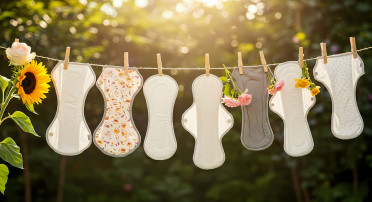
There are also environmental issues. Massive use of disposable menstrual products, many of which contain non-biodegradable plastics, generate a considerable amount of refuse, especially in regions without sufficient or reliable garbage collection. This highlights the need to promote sustainable alternatives such as reusable menstrual protection products—products that both respect the environment and are affordable for all.
Last, combating period poverty requires us to change our way of talking about menstruation and periods. Using terms such as “menstrual health” rather than “menstrual hygiene” and “period products” rather than “hygienic protection” help to shift from a purely hygienist approach and integrate menstruation into a global vision of health and human rights. Revising language on menstruating bodies and combating stigmatizing representations are levers that work in favor of “period dignity.”
What research is being done on the subject at INED?
I coauthored a book chapter with Marion Ravit, a researcher at the Institute for Research on Development (IRD)/Population and Development Center (CEPED) who studies the environmental impacts of period poverty in the Philippines, among other places. The chapter in a book on menstruation presents a view of period poverty in global North and South countries. In March of 2025, after this first collaborative project, and together with other CEPED colleagues (INED associated researcher Joseph Larmarange and Clémence Schantz), we organized a study day on the subject at the Maison des Sciences de l’Homme Paris Nord that together several speakers who were either researchers or members of civil society in France or sub-Saharan Africa. We are also working together to design a project on how heavy periods are treated in Ivory Coast.
The issue of period poverty is taken up in the “Parcours de fécondité et de santé reproductive Outremer” survey (ParFécOMSa [Fertility and reproductive health trajectories in [France’s] overseas regions and departments]), which I co-run with Arnaud Régnier-Loilier and Didier Breton. The survey data will be collected in 2028 in Reunion, Martinique, Guadeloupe, and French Guiana.
Meanwhile, Violet Alarcão and Elise de la Rochebrochard are heading a project called Cross Minds to construct indicators for monitoring menstrual health in France and Portugal.
Sources: Becquet, V. et Ravit, M. (2023). « Du Nord au Sud, la précarité menstruelle est universelle. » Dans Dirigé par M. Coville, H. Morel et S. Tabois Idées reçues sur les menstruations Corps, sang, tabou : Corps, sang, tabou (p. 55-60). Le Cavalier Bleu [FR]