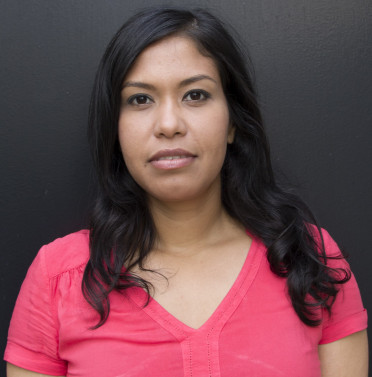

Jenny Garcia
After winning a Marie Skłodowska-Curie post-doctoral fellowship, Jenny Garcia obtained a two-year post-doctoral grant (ANR ACCESS ERC; see below) and has been using it since 2024 to work in INED’s “Mortality, Health and Epidemiology” research team.
(Interview conducted in April 2025)
Could you tell us what an ANR ACCESS ERC grant is?
The particularity of these grants is that they don’t directly fund a research project but instead are used to fund the grant recipient’s work in a French research lab, after which the grant recipient should be in a better position to develop a competitive proposal for an ERC Starting Grant. [ANR is the acronym for France’s National Research Agency, while ERC stands for European [Union] Research Council: the ANR grant gives the researcher a solid opportunity—potential ACCESS—to an ERC Starting Grant]. In 2024, 16 researchers were awarded an ANR ACCESS ERC to work on a highly varied range of subjects.
So to work up the ERC Starting Grant proposal, the ANR ACCESS ERC grant recipient needs to work on their profile or CV. The point is to lay out from a certain distance what you’ve done so far, identifying your strong points but also what could be improved, and to acquire experiences you can then add to have a more complete profile. There is no format: ANR ACCESS ERC Starting Grant recipients develop their own.
To apply for this program you need to submit a file a few pages long that includes your scientific project, a list of your scientific research accomplishments (publications, scientific articles, articles for a wide general readership, etc.), the experiences you would like to acquire, and a budget. I explained my motivations and submitted my application, specifying I would use the grant to work at INED.
In my case, I’d already published a number of articles in reliable scientific journals, and I had an international professional network thanks to the studies I’ve already done up up until now; also, I was participating in a group of experts. What was missing, among other things, was experience tutoring students.
Grant recipients are guided in their administrative formalities and at the research team level by the head of the team and a researcher specialized in their subject. In my case I’ve been working with senior INED researcher Aline Désesquelles in the area of cardiovascular mortality.
This is a two-year grant, but the ERC sends out a call for proposals annually, so I intend to apply twice, with the profile that corresponds best to what is expected.
Why did you apply for an ANR ACCESS ERC grant, and what was the application procedure like?
The ANR ACCESS ERC program represents a unique opportunity, which is to think about and work on one’s own professional path as a researcher. I would therefore encourage all researchers who want to send in a proposal to do so! What’s more, the program enables you to join a network, attend seminars, and to benefit from advice on submitting a high-quality proposal for the European Starting Grant.
I wanted to develop my research network on cardiovascular mortality questions and my knowledge of particular methodological techniques so I could work in greater depth on the research project I want to propose.
Can you tell us something about your research on cardiovascular mortality in Latin America and how are you conducting it?
I’m currently fine-tuning the goals of my different research subjects and the methods to be used. I’m concentrating on more detailed database reviews, and on contacting university specialists in Latin America to discuss their research.
Alongside those activities, I’m coordinating a seminar at the University of the Republic (Uruguay) on health and mortality in Latin American—another opportunity for me to extend my network in that geographical area.